TL;DR Summary of How AI Tools Revolutionize Coding and Accessibility for Developers
Optimixed’s Overview: Enhancing Developer Efficiency and Accessibility with Advanced AI Coding Tools
AI-Powered Development Workflows: A New Era of Productivity
Claire’s real-world experiment showcases how leveraging two leading AI models, GPT-5.3 Codex and Claude Opus 4.6, can accelerate software engineering tasks. By assigning Opus the role of feature builder and Codex as the code reviewer, she achieved remarkable output: 44 pull requests and over 93,000 lines of code added within five days—tasks traditionally requiring months.
- Opus 4.6 excels in creative, long-term project planning and execution, making it ideal for initial feature development and redesigns.
- GPT-5.3 Codex functions as a meticulous reviewer, identifying edge cases and refining code but struggles with open-ended creative tasks.
- Combining these models mimics a junior-senior developer dynamic, optimizing productivity and code quality.
- Interfaces like Cursor enhance AI performance by integrating planning tools and exploration features, improving results beyond native apps.
Advancing Accessibility: AI Tools Empower Visually Impaired Engineers
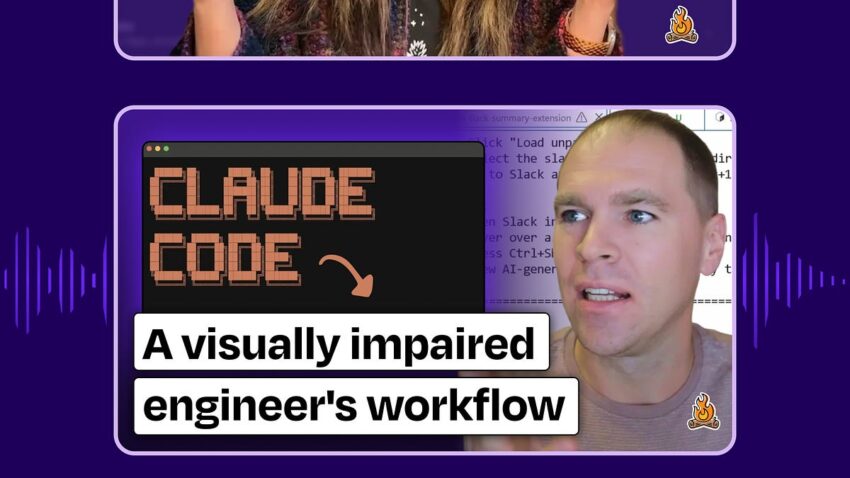
Joe McCormick, a principal engineer with significant vision loss, demonstrates how AI-driven Chrome extensions and keyboard shortcuts drastically improve accessibility in software development and daily tasks.
- Custom tools using Claude Code describe images, correct typos, and summarize links, all triggered via efficient keyboard shortcuts to reduce reliance on visual cues.
- Simple interface modifications and sound alerts make AI tools more compatible with screen readers.
- Running Slack in a browser rather than a desktop app enables these powerful customizations through Chrome extensions.
- Creating reusable Claude Skills accelerates development of accessibility tools, compounding efficiency gains.
- Multimodal AI like Gemini opens new possibilities for personal experiences, such as reading stories aloud to children, enhancing quality of life.
The Future of AI in Software Development
These case studies illustrate a pivotal moment where AI not only enhances coding speed and quality but also bridges gaps in accessibility. By thoughtfully combining AI models and leveraging intelligent interfaces, developers can achieve unprecedented workflows and inclusivity. As AI tools evolve, they promise to further democratize software development and empower diverse engineering talents worldwide.