TL;DR Summary of Ecommerce AI Search Optimization: What Citation Patterns Across 5 Subverticals Tell Us About Optimizing Beyond PDPs and PLPs
Optimixed’s Overview: Deep Insights into AI-Driven Ecommerce Search Strategies Beyond Traditional Page Optimization
Expanding the Scope of Ecommerce AI Search Optimization
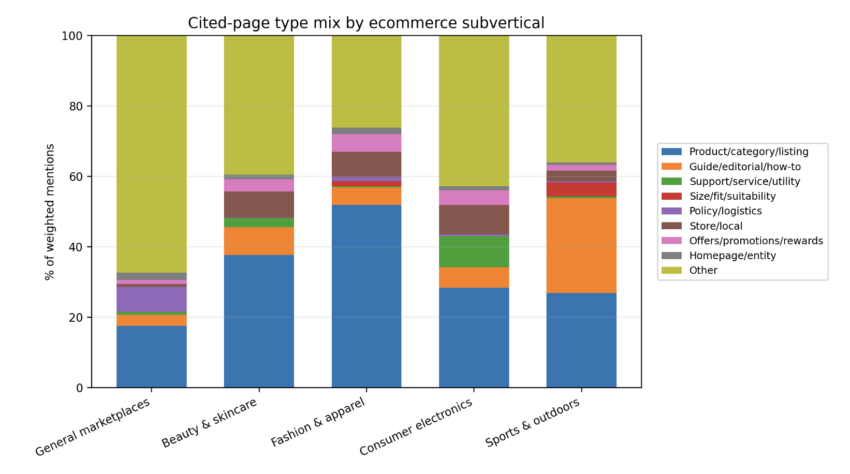
Traditional ecommerce SEO focuses heavily on optimizing product and category pages. However, recent data analysis across five US ecommerce subverticals—general marketplaces, beauty and skincare, fashion and apparel, consumer electronics, and sports and outdoors—reveals that AI search systems rely on a much wider array of content to answer buyer queries effectively. This includes support articles, size and fit guides, policies, educational content, third-party reviews, community discussions, and video platforms.
Key Citation Patterns and Their Implications
- Broader Citation Sources: AI models frequently reference pages that reduce buyer uncertainty rather than only transaction pages. For example, fit guides in fashion or repair pages in electronics are heavily cited.
- Vertical-Specific Source Roles: While domains like Amazon, YouTube, Reddit, eBay, and Instagram appear across all subverticals, their roles differ—for instance, YouTube serves as tutorials for electronics and style demos for fashion.
- Evidence Mix Reflects Buyer Needs: Technical products like electronics emphasize specs and support content, whereas beauty focuses on suitability and routine, and sports prioritizes activity-specific gear guidance.
- Marketplace vs Brand Retailer Dynamics: Marketplaces cite each other extensively, creating a shared ecosystem, while brand retailers rely more on specialist media, manufacturers, and niche communities for validation.
Subvertical-Specific Optimization Priorities
- General Marketplaces: Prioritize clear, crawlable information on marketplace trust, policies, seller pages, and logistics to build confidence in the platform’s legitimacy and operations.
- Beauty & Skincare: Enhance product attributes tied to skin type, tone, ingredients, and develop educational content addressing real suitability questions supported by community and creator validation.
- Fashion & Apparel: Treat size, fit, style, authenticity, and returns content as primary assets and integrate visual/social proof to support product credibility.
- Consumer Electronics: Focus on detailed specifications, compatibility, troubleshooting, repair, and expert reviews to address complex buyer decision factors.
- Sports & Outdoors: Own the activity use-case context by providing gear guides, checklists, and advice tailored to skill level, terrain, and environment.
Strategic Recommendations for Ecommerce AI Search Specialists
To build effective AI search visibility, ecommerce SEO teams must:
- Audit the entire evidence layer that AI systems use, including owned pages, product data, structured data, support content, third-party sources, and social or community platforms.
- Map buyer uncertainty points specific to each subvertical and identify gaps in content or corroboration that hinder AI’s ability to confidently answer queries.
- Ensure consistency and extractability of product and support information across feeds, PDPs, guides, and policies.
- Develop vertical-specific prompt libraries reflecting actual buyer questions including fit, suitability, compatibility, legitimacy, and post-purchase support.
- Collaborate across SEO, merchandising, content, PR, and product data teams to optimize both on-site quality and off-site validation.
Conclusion
Ecommerce AI search optimization extends well beyond traditional PDP and PLP improvements. The most effective strategies integrate a comprehensive, vertical-specific information architecture that addresses buyer uncertainty through a mix of owned and third-party sources. By focusing on the full spectrum of citation patterns and evidence types, brands can enhance AI-driven visibility, trust, and conversion in increasingly complex ecommerce landscapes.