TL;DR Summary of The Best Google Search Alternatives in 2026: A Comprehensive Comparison
Optimixed’s Overview: Navigating the Top Google Search Alternatives and Their Unique Advantages in 2026
Introduction to the Changing Search Landscape
Google continues to dominate search globally, but increasing AI integration and regulatory changes have shifted how users and publishers consider alternatives. The rise of AI answer engines and independent indexes, alongside new European initiatives like EUSP, have diversified the market. This overview evaluates leading engines based on result quality, AI control, index independence, pricing, and practical usefulness.
Key Players and Their Strengths
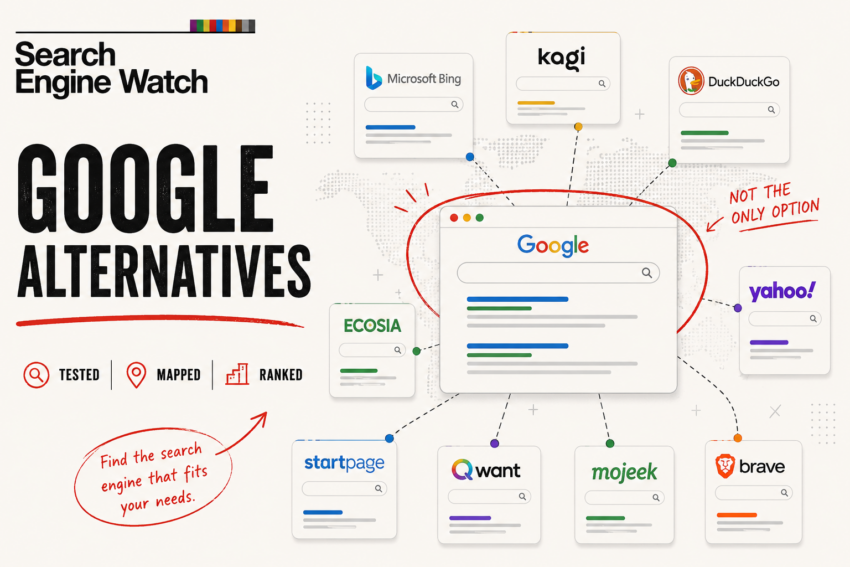
- DuckDuckGo No-AI: Best free default alternative with Bing-powered traditional links but no AI-generated overviews or images. Scores 55/60 in retrieval tests, excellent for everyday queries without AI distractions.
- Brave Search: Provides a fully independent index built from scratch with community-driven ranking tweaks. Some AI elements remain active, and availability issues limited full testing, but it excels in index diversity.
- Startpage: Offers mainstream search results anonymized from Google and Bing without AI summaries or chatbots. Exceptional for exact-page retrieval but weaker in local and commercial modules.
- Bing: Strong all-in-one fallback excelling in local search and images. However, AI Copilot and sponsored content can clutter the interface, and video search may be inconsistent.
- Kagi: A paid subscription service blending proprietary and external indexes with advanced ranking controls and optional AI, ideal for heavy or professional search users.
- Ecosia: Mission-driven with an evolving European index (EUSP) and a clear AI-free setting, supporting environmental causes and regional search sovereignty.
- Other notable options: MetaGer (nonprofit metasearch), SearXNG (self-hosted source control), Mojeek (UK-based independent crawler), Swisscows (family-friendly filtering).
Understanding Search Layers and AI’s Role
Search engines involve multiple layers: interface, index, ranking, and answer synthesis. Many “alternatives” rely on Google or Bing indexes under the hood but add anonymization or ranking tweaks. AI answer engines like ChatGPT Search and Perplexity synthesize multiple sources into prose, useful for research but not replacements for exhaustive discovery and verification.
Testing Methodology and Results
The study used a fixed set of 12 desktop queries, tested in a logged-out environment with location set to France/Paris. Scores measured retrieval usefulness only, excluding privacy and interface preferences. Google scored 58/60, with DuckDuckGo No-AI close behind at 55/60. Startpage and Bing followed, while Brave was partially tested due to bot challenges.
Recommended Search Stacks for Different Needs
- Clean No-AI Stack: Default to DuckDuckGo No-AI, fallback to Startpage for exact retrieval, and Google/Bing for maps and shopping.
- Independent Index Stack: Use Brave Search primarily, supplement with Mojeek and Ecosia (where EUSP is available), with Bing/Google fallback.
- Professional Research Stack: Kagi for links, ChatGPT Search or Perplexity for synthesis, plus primary sources and archive tools.
- Marketer’s Coverage Stack: Combine Google Search Console, Bing Webmaster Tools, multiple alternative referrers, and AI monitoring tools.
Final Insights
The best Google alternative depends on your priorities: if you want a familiar, free, AI-free experience, DuckDuckGo No-AI is the top choice as of 2026. For supporting independent indexes, Brave Search is preferred despite some AI presence. Startpage suits users wanting anonymized mainstream results without AI summaries. Paid options like Kagi offer customization and no ads. Always complement your search with appropriate fallbacks and specialized tools to cover local, shopping, and AI-assisted research needs effectively.