TL;DR Summary of How Google Uses User Data and AI to Rank Search Results
Optimixed’s Overview: Understanding Google’s AI-Driven Search Ranking and What It Means for SEO
Google’s Ranking Architecture and User Data
In the recent DOJ vs Google trial, it was revealed that Google’s search ranking consists of three main components:
- Traditional ranking systems that produce initial results.
- AI systems such as RankBrain, DeepRank, and RankEmbed that re-rank the top 20-30 documents.
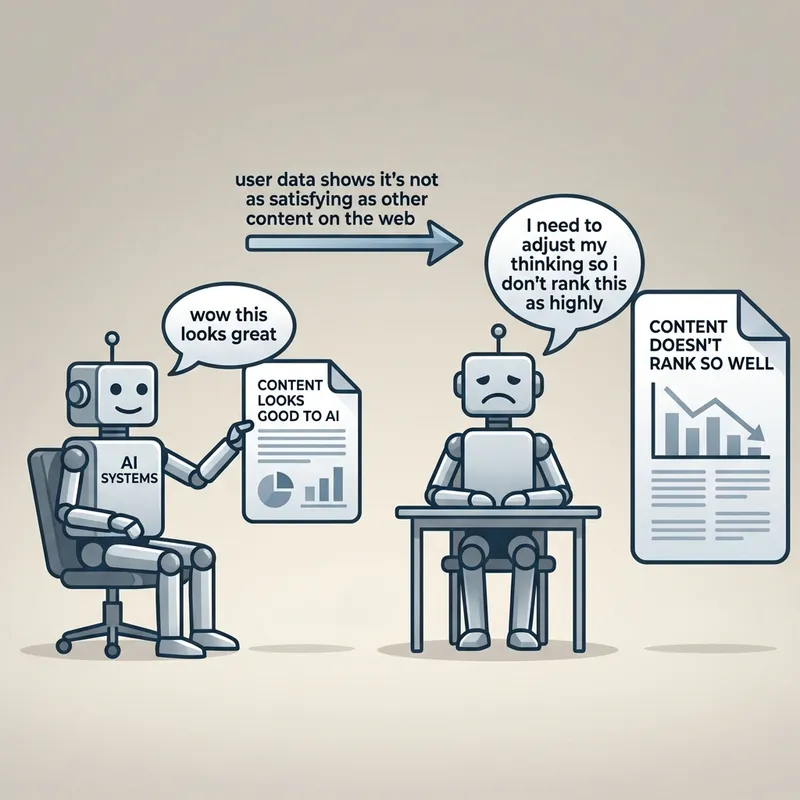
- Quality Rater feedback and live user tests that fine-tune these AI models.
Google’s edge lies in the vast amount of user interaction data it collects, which it uses to train AI models like RankEmbed. This model embeds user queries into a vector space to find content closely related to the search intent.
How Live User Tests Shape Search Results
Google’s live experiments don’t just track clicks on specific pages; instead, they help the AI learn what kinds of content patterns satisfy searchers. This means the system predicts which pages are helpful based on user behavior trends rather than optimizing for individual URLs. This continuous learning process enables Google to better understand and meet user intent over time.
SEO Implications: Focus on Genuine Helpfulness Over Technical Tricks
Optimizers ranking on the first few pages have passed traditional ranking filters and are then evaluated by sophisticated AI systems. With Google integrating Personal Intelligence via Gemini and AI Mode, results are becoming more tailored to individual users.
- Attempting to reverse-engineer vector search or obsess over cosine similarity can be counterproductive unless your content truly meets user needs better than competitors.
- Instead of keyword stuffing or manipulating AI signals, focus on creating high-quality, engaging content that answers user questions effectively.
- Use headings, visuals, and easy navigation to improve user experience, which in turn improves metrics like session duration and scroll depth.
Ultimately, Google’s systems reward content that is original, insightful, and valuable. SEO success comes from aligning your content strategy with what real users find helpful, not just what AI algorithms might superficially prefer.