TL;DR Summary of Understanding LinkedIn’s Dual-Stage Algorithm for Better Content Reach
Optimixed’s Overview: Decoding LinkedIn’s Two-Tier Feed Algorithm to Maximize Content Visibility
The Dual-Stage Mechanism Behind LinkedIn’s Feed Distribution
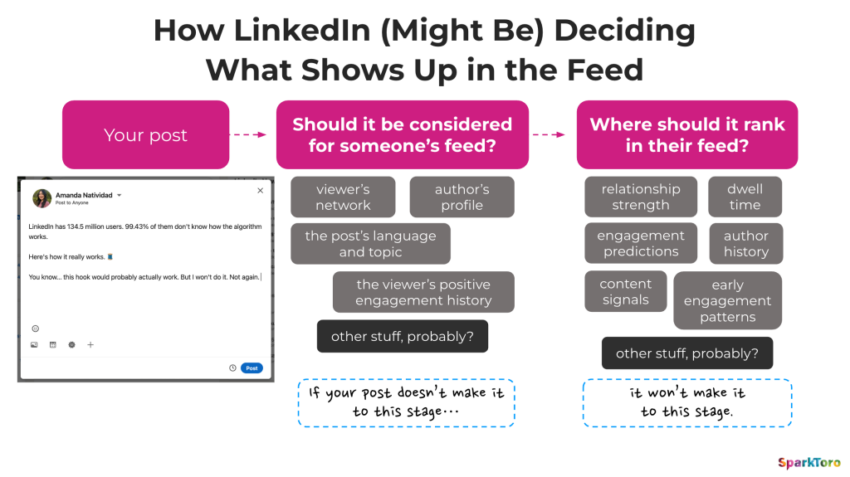
LinkedIn’s content distribution is not governed by a single monolithic algorithm but by two interconnected systems that function sequentially:
- Retrieval Stage: This initial filter determines whether a post is even eligible to appear in a particular user’s feed. It narrows down the universe of posts to a candidate pool tailored to the viewer by analyzing signals such as the viewer’s network, the author’s profile and topical identity, language, and the viewer’s history of positive engagements.
- Ranking Stage: Once a post enters the candidate pool, this system predicts how likely the viewer is to engage with it, ranking posts by relevance using factors like relationship strength, predicted engagement type, dwell time, early engagement patterns, and author history.
Key Insights for Marketers and Content Creators
- Clarity and Topic Consistency: Clearly defining your expertise and maintaining consistent content topics helps LinkedIn’s system accurately associate your posts with relevant audiences, increasing the chance of retrieval and favorable ranking.
- Engagement Quality Over Timing: While posting timing and frequency have some impact, the quality of interactions and engagement from relevant, high-quality audiences is more critical to success.
- Positive Engagement Signals Matter: LinkedIn’s algorithm learns only from positive engagements (likes, comments, shares, long dwells) and disregards passive scrolling, so fostering genuine conversations is a powerful signal for boosting reach.
- Audience Alignment and Participation: Engaging thoughtfully with your target communities before posting content builds stronger relationship signals, improving retrieval and ranking outcomes.
Practical Recommendations to Enhance LinkedIn Reach
To harness this dual-stage algorithm effectively, marketers should:
- Optimize Profile and Content Messaging: Use clear, consistent language that communicates your expertise and topics to help LinkedIn categorize your content correctly.
- Engage Intentionally: Participate in discussions relevant to your audience and avoid scattered, off-topic interactions that dilute your engagement signals.
- Focus on Sustained Quality Over Quantity: Maintain a manageable posting cadence that prioritizes content quality and encourages meaningful conversations.
- Leverage Audience Research Tools: Tools like SparkToro can help identify where your target audience congregates online, enabling more strategic engagement and content distribution.
Understanding Algorithmic Nuances and Long-Term Strategy
LinkedIn enforces a 30-day limit on how long posts remain eligible for retrieval in certain feed pathways, highlighting the importance of consistent posting. Additionally, engagement from users strongly connected to the author or audience can carry more weight than broad viral reach. These insights suggest that building a focused, engaged network and fostering community interaction are more sustainable strategies than aiming for sporadic viral hits.
Ultimately, succeeding on LinkedIn requires making it easy for the algorithm to understand who you are, what you talk about, and which audiences your content serves. By doing so, your posts are more likely to reach the right people and spark meaningful engagement that fuels ongoing visibility.