TL;DR Summary of US Domain Visibility Shifts Following March 2026 Google Core Update
Optimixed’s Overview: Key Insights into Google’s March 2026 Core Update Impact on Search Visibility Across Major Verticals
Visibility Consolidation Around Authoritative and Direct Destinations
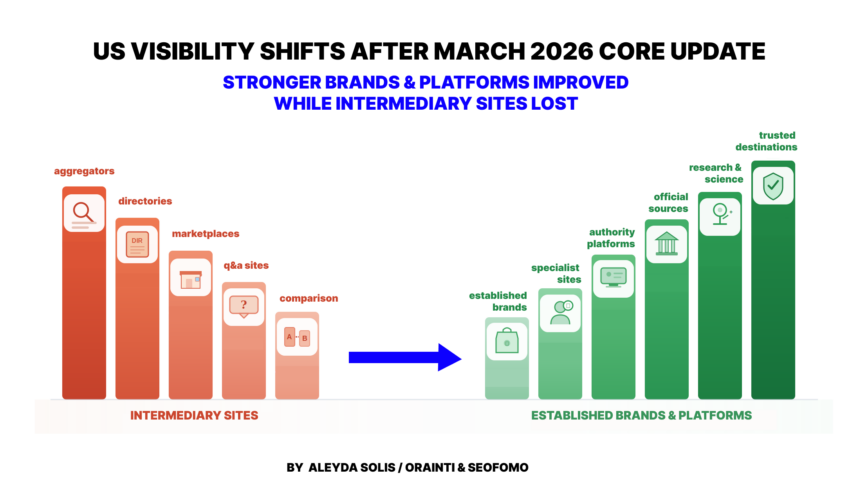
Analysis of Sistrix data from March 26 to April 11, 2026 reveals a clear trend: Google’s update shifted domain-level visibility away from numerous intermediary and aggregator sites towards a smaller set of established, specialist, and official platforms. This consolidation occurred across multiple verticals, reflecting Google’s prioritization of directness, trustworthiness, and query relevance.
Sector-Specific Shifts and Patterns
- Dictionaries and Language Reference: Major declines for aggregator dictionaries like Wiktionary (-21.3%) and Collins Dictionary (-30.0%), with gains for Merriam-Webster, Wikipedia, and Cambridge, indicating a preference for stronger, recognized reference platforms.
- Jobs: Broad job boards such as ZipRecruiter (-36.6%) and Glassdoor (-36.3%) lost ground, while specialized or direct employer pages like Amazon.jobs (+242.7%) and USAJobs (+25.5%) gained, showing a shift towards sources closer to the hiring entity.
- Government and Public Sector: Official domains (e.g., Census.gov +30.2%, BLS.gov +26.8%) saw significant visibility increases, especially for fact-heavy and trust-sensitive queries, highlighting Google’s emphasis on authoritative data sources.
- Health: Visibility re-sorted by source type; broad consumer-health sites like Healthgrades (-43.5%) declined while specialist, research-based sources such as NEJM (+107.3%) and Nature (+41.0%) gained, reflecting nuanced query intent matching.
- Travel: Broad planning platforms like Travelocity (-44.3%) declined as visibility shifted to stronger travel brands, suppliers, and dominant platforms like Trivago (+31.9%) and hotels.com (+9.6%).
- Real Estate: Rental directories such as Apartments.com (-24.8%) lost visibility, while destination leaders Zillow (+5.8%) and Opendoor (+136.0%) grew, emphasizing brand strength and category dominance.
- Finance: Broad marketplace sites like Credit Karma (-40.6%) declined, but gains were split among direct financial institutions (American Express +26.3%) and major finance publishers, showing a complex visibility redistribution.
- Ecommerce: Mixed outcomes with visibility concentrating around brands with clear product identity (Coach +90.2%, Hermès +99.8%), while large general retailers faced declines, indicating query fit and brand strength as key factors.
Strategic Implications for SEO
The overarching lesson is that Google increasingly favors sites that serve as final destinations rather than intermediary layers. Sites that act as direct, authoritative sources aligned with user intent are better positioned to gain visibility. SEO strategies should thus focus on strengthening brand authority, improving trust signals, and enhancing content relevance to specific query types. Particularly in sensitive verticals like health and government, aligning with official data and specialized expertise is crucial.
Conclusion
The March 2026 core update highlights a deliberate move by Google to streamline user journeys by concentrating search visibility on fewer, stronger domains that embody trust, expertise, and direct relevance. Intermediary and aggregator models may face ongoing challenges unless they evolve into more distinctive, authoritative destinations. Staying informed on update impacts and adapting SEO approaches accordingly will remain vital for maintaining and growing search presence.