TL;DR
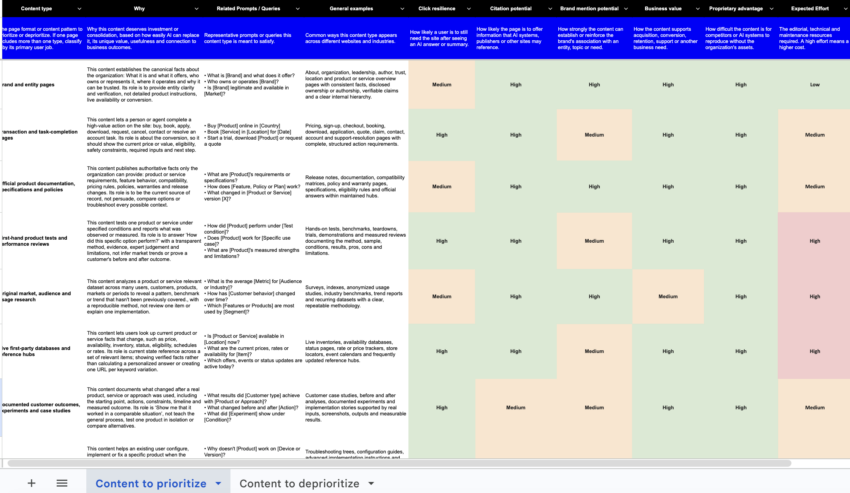
Aleyda Solis introduces a content prioritization framework for the AI search era, emphasizing content types that provide value beyond AI-generated answers. The framework assesses content based on click resilience, citation potential, brand mention potential, business value, proprietary advantage, and expected effort. It suggests prioritizing content that offers unique insights, supports meaningful decisions, or enables actions, while deprioritizing content easily replaced by AI, such as generic definitions and rehashed guides.
Key Developments
- A content prioritization framework is introduced to evaluate content types in the AI search era.
- The framework uses six criteria: click resilience, citation potential, brand mention potential, business value, proprietary advantage, and expected effort.
- Content types worth prioritizing include brand pages, transaction pages, official documentation, and original research.
- Content types to deprioritize include standalone definitions, rehashed guides, and third-party news rewrites.
- The framework includes a downloadable worksheet for practical application.
Optimixed Analysis
The framework provides a structured approach to content strategy in an AI-driven search environment, emphasizing the need for content that AI cannot easily replicate. By focusing on unique, actionable, and proprietary content, businesses can maintain relevance and drive user engagement. The framework’s criteria help differentiate between content that adds genuine value and content that AI can replace, guiding strategic content investments. However, the effectiveness of this approach depends on continuously validating content performance against real-world data and adapting to evolving user behaviors and AI capabilities.