Source: Unknown Source. Read the original article
TL;DR Summary of Understanding Search Volume Data: Google Trends vs Exploding Topics
Google Trends offers valuable insights into relative search interest over time but does not provide absolute search volume data. This means you see popularity on a 0-100 scale rather than exact numbers. For precise search volumes and trend forecasting, Exploding Topics delivers actual monthly search data and future trend predictions. Using Exploding Topics allows businesses to make informed decisions based on real data rather than relative indicators.
Optimixed’s Overview: How to Access Accurate Search Volume and Trend Forecasts Beyond Google Trends
Limitations of Google Trends’ Relative Search Volume
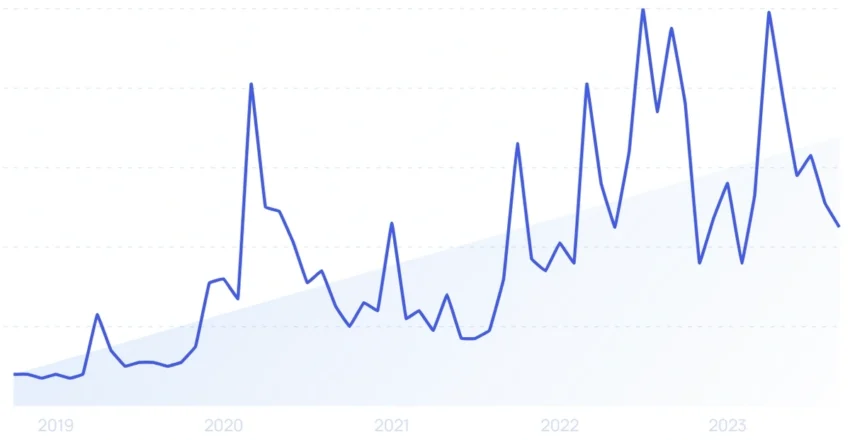
Google Trends is a popular tool to observe how keyword interest changes over time, displaying data on a scale from 0 to 100. However, these numbers only represent relative popularity rather than the exact number of searches. For example:
- A value of 100 signifies peak popularity, while 25 means one-quarter of that peak volume.
- This scale does not reveal whether 100 corresponds to 100 or 10,000 actual searches.
- “Breakout” keywords indicate rapid growth but still lack absolute search volume details.
Therefore, while Google Trends helps identify rising topics, it leaves marketers guessing about real search demand.
Exploding Topics Provides Absolute Search Volume and Forecasting
Exploding Topics fills this gap by offering actual search volume numbers alongside historical trend charts. Key advantages include:
- Exact monthly search volume figures (e.g., 90.5k searches for “pickleball shoes” in a given month).
- Human-vetted “exploding” keywords to distinguish genuine trends from fleeting fads.
- 12-month future forecasts powered by machine learning to predict trend trajectories.
- An API for integrating real-time trend data into workflows, automations, and apps.
Making Smarter Decisions with Real Data
Absolute search volume and forward-looking forecasts empower businesses to:
- Identify trending keywords that are likely to grow rather than just reflecting past popularity.
- Create content and marketing strategies based on precise demand metrics.
- Stay ahead of the curve with API-driven notifications and automation tools.
In contrast, Google Trends’ API maintains the relative scale limitation, making Exploding Topics a superior choice for data-driven decision-making.