TL;DR
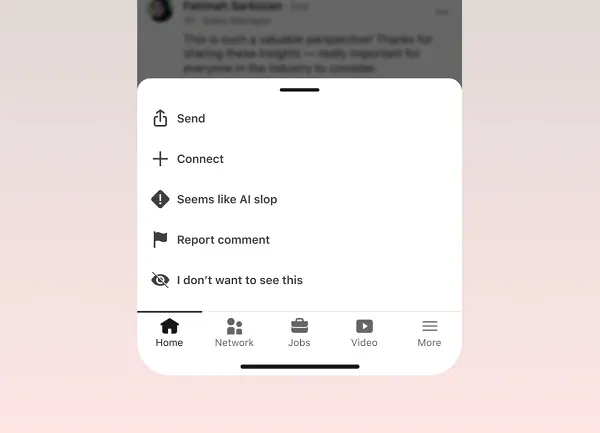
LinkedIn is testing a feature allowing users to report content suspected of being AI-generated, termed “AI slop.” This initiative aims to refine LinkedIn’s content classification systems and address concerns over automated comments undermining trust. Concurrently, LinkedIn is removing an AI feature that enhances posts, acknowledging potential negative impacts on user engagement.
Key Developments
- LinkedIn users can now report posts and comments suspected of being AI-generated.
- The platform will notify users if their content is flagged as inauthentic or heavily AI-influenced.
- LinkedIn is removing its “enhance your post” feature, replacing it with a proofreading tool.
- This move comes amid broader concerns about AI tools enabling excessive automation and undermining trust.
- Over 100 million LinkedIn users have verified their identities, but AI-generated content remains a trust issue.
Optimixed Analysis
LinkedIn’s decision to allow users to report AI-generated content suggests a growing concern over the authenticity of interactions on the platform. By removing the “enhance your post” feature, LinkedIn acknowledges the potential for AI tools to detract from genuine user engagement. This development highlights the tension between leveraging AI for content creation and maintaining trust in professional networks. The move may indicate a shift towards prioritizing human-authored content, which could influence how other platforms balance AI integration and user authenticity.
What to Watch Next
- Effectiveness of LinkedIn’s new AI content reporting feature in improving content authenticity.
- Potential changes in user engagement metrics following the removal of the “enhance your post” feature.
- Responses from other social platforms regarding AI-generated content and user trust.