Source: Social Media Today – Latest News by Andrew Hutchinson. Read the original article
TL;DR Summary of YouTube Expands Advanced Likeness Detection to All Users Over 18
YouTube is broadening access to its advanced likeness detection system, now available to all users aged 18 and older. This industry-first tool uses face scans and government ID to help users monitor and act on unauthorized use of their image. The system aims to protect against AI-generated deepfakes and unauthorized content, enhancing user control and privacy. The feature will roll out gradually, marking a significant move in combating image misuse on social media platforms.
Optimixed’s Overview: YouTube’s New Likeness Detection Empowers Users to Protect Their Digital Identity
Introduction to YouTube’s Likeness Detection Expansion
YouTube has taken a groundbreaking step by expanding its advanced likeness detection tools to all users over 18 years old. This system, developed over two years, leverages facial recognition and ID verification to scan uploaded content and alert users if their image appears without authorization.
How the Likeness Detection System Works
- Face Scans & ID Cross-Check: Users’ facial data and government-issued IDs are used to create a reference for detecting likeness in videos.
- Content Monitoring: The system scans newly uploaded videos to identify possible uses of the user’s likeness, including altered or synthetic representations.
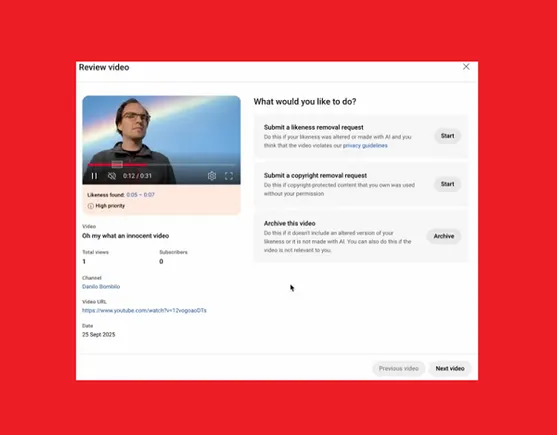
- User Alerts & Control: When a match is found, users receive notifications and can review the content in YouTube Studio, requesting removal if necessary.
Benefits and Industry Impact
This tool offers several advantages:
- Protection Against Deepfakes: Helps users defend their reputation from AI-generated or manipulated videos.
- Enhanced Privacy Control: Empowers users to manage how their likeness is used across the platform.
- Industry Leadership: YouTube’s proactive approach sets a precedent for other social media platforms to adopt similar protective technologies.
Context and Future Outlook
Following YouTube’s phased rollout—starting with select creators and officials—this latest expansion makes the tool widely accessible. This move addresses growing concerns about AI misuse and online impersonation, potentially inspiring broader adoption of likeness detection tools across digital platforms.