Source: Social Media Today – Latest News by Andrew Hutchinson. Read the original article
TL;DR Summary of Reuters Institute’s 2026 Digital News Report Reveals Shifts in News Consumption
The 2026 Reuters Digital News Report highlights a significant rise in social media as the primary news source across all age groups. Platforms like TikTok and Instagram are gaining influence while traditional channels such as TV and news websites decline. The report raises concerns about algorithm-driven content and the growing role of online creators, which may contribute to misinformation. Additionally, the increasing use of AI chatbots for news poses risks due to potential inaccuracies.
Optimixed’s Overview: Emerging Trends and Challenges in Modern News Consumption
Shifting News Sources and Platforms
The 2026 Digital News Report by the Reuters Institute sheds light on the evolving landscape of how people access news globally. Key findings include:
- Social media dominance: Social platforms have overtaken TV and traditional news websites as daily news sources for a majority of users.
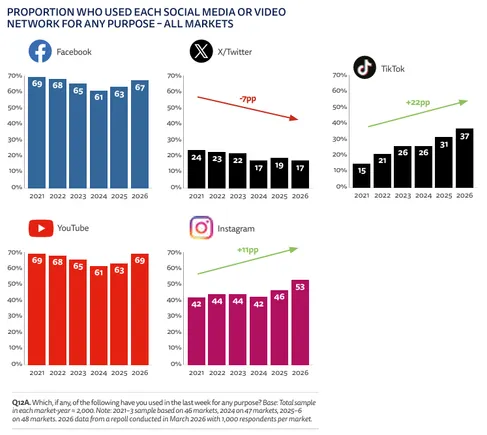
- Platform dynamics: TikTok and Instagram are on the rise, whereas X (formerly Twitter) is experiencing a decline in news engagement, partly due to audience fragmentation and the emergence of alternatives like Threads.
- Age group trends: Increased dependence on social apps for news is consistent across all age demographics.
Influence of Algorithms and Content Creators
The report underscores concerns regarding the impact of algorithm-driven content discovery and the motivations behind online creators:
- Algorithmic control: Social media platforms prioritize engagement, which can distort news dissemination and potentially amplify misinformation.
- Creators as news sources: Online creators are becoming important news providers but often prioritize audience engagement or sponsorship over factual accuracy.
Emerging Risks with AI and Information Accuracy
Artificial intelligence chatbots are increasingly being used as news sources, presenting new challenges:
- AI hallucinations: The tendency of AI to generate factually incorrect or misleading information raises concerns about trustworthiness.
- Verification gaps: Many users accept AI-generated information without cross-checking with reliable sources, heightening misinformation risks.
Overall, the report highlights a critical vulnerability in the modern information ecosystem driven by social media’s dominance and engagement-focused content strategies, emphasizing the need for increased media literacy and verification practices.