TL;DR Summary of How Agentic AI is Revolutionizing Marketing Workflows in 2026
Optimixed’s Overview: Harnessing Agentic AI to Transform Marketing Efficiency and Creativity
Understanding Agentic AI in Marketing
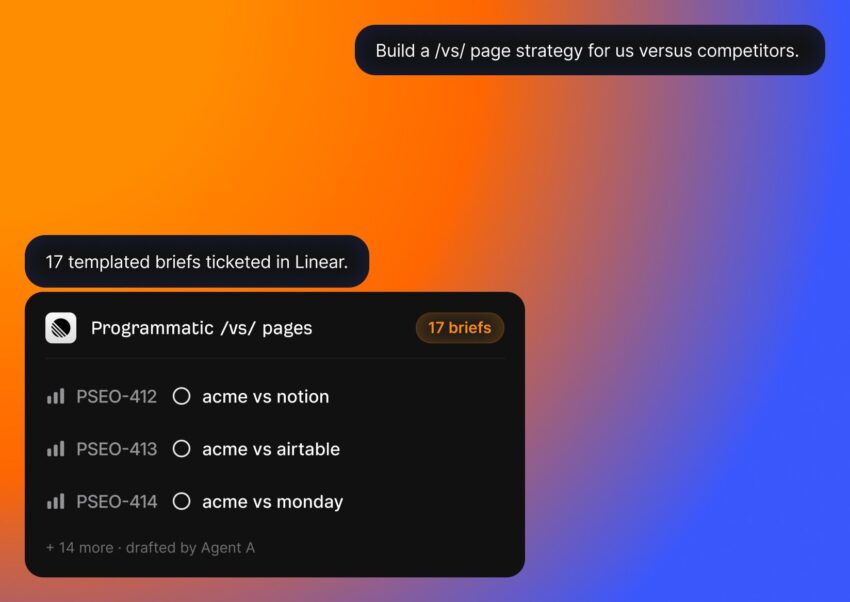
Agentic AI refers to AI systems designed to autonomously complete complex marketing projects—from planning campaigns to generating multi-channel content—without constant human intervention. Unlike simple chatbots, agentic AI combines large language models (LLMs) with dynamic workflows, tool integrations, and feedback loops to deliver finished outputs rather than just task lists.
Key Features of Ahrefs’ Agent A
- Full Ahrefs Data Access: Unrestricted use of proprietary SEO and marketing datasets.
- Robust Tech Stack: Utilizes Postgres, Flask, OpenRouter proxy, web scraping, OCR, and scheduled jobs.
- Native Integrations: Connects seamlessly with Slack, HubSpot, GitHub, Notion, Mailchimp, and more.
- Expert Skill Library: Pre-built marketing applications reflecting real-world workflows.
Rising Adoption and Cost Efficiency
Search interest in “agentic AI” surged 84× from 2023 to 2026, signaling broad awareness and curiosity. Meanwhile, LLM pricing has dropped dramatically, making multi-step agent runs cost-effective at cents per execution. This enables marketers to deploy AI agents for tasks previously too time-consuming or expensive.
Common Types of AI Agents and Terminology
- Agentic Environments: Developer-focused platforms for building custom AI agents.
- Open-source Agents: Self-hosted, customizable agents requiring technical setup.
- Specialized Agents: Purpose-built for specific marketing tasks, like Agent A.
Important terms include Tools (functions the agent can call), Skills (task playbooks), Human-in-the-loop (approval steps), and Guardrails (rules limiting agent actions).
Eleven Practical Marketing Use Cases for AI Agents
- Keyword Research & AI Gap Analysis: Identifying content opportunities and gaps in AI assistant mentions versus competitors.
- Automated Article Drafting: Researching, outlining, drafting, and fact-checking long-form content with staged human approvals.
- Monthly Performance Reporting: Auto-generating SEO and traffic summaries comparing current and past metrics.
- Competitive Analysis: On-demand niche competitor identification and gap spotting.
- Custom Internal Tools: Building workflow-specific apps without engineering resources.
- Product Launch Kits: Generating consistent messaging assets across channels from a single brief.
- Catalog Product Page Refresh: Optimizing titles, meta, and intros for near-ranking products to boost SEO.
- Lifecycle Emails: Creating behavior-based onboarding sequences using product usage data.
- Recruiting Automation: Dashboarding hiring pipelines, drafting job descriptions, and scoring test submissions.
- YouTube SEO & Thumbnails: Analyzing video traffic sources and generating engaging thumbnails.
- Content Repurposing: Transforming existing content into multi-platform social media posts.
Best Practices for Working with Agentic AI
- Connect to Live Data: Avoid stale or generic outputs by linking agents to real-time data sources.
- Maintain Human Oversight: Review outputs thoroughly before publishing to catch errors or hallucinations.
- Use Checker Agents: Employ secondary AI agents to verify and improve the primary agent’s work.
- Stay Organized: Limit the number of AI-built tools to those actively used and maintain ownership for quality control.
The Future of Marketing with Agentic AI
Agentic AI represents the next evolution in marketing workflows, automating routine and data-heavy tasks while freeing humans to focus on strategy, creativity, and relationship-building. As these systems mature, marketers are likely to manage teams of AI agents, enhancing productivity and innovation. Starting today with tools like Ahrefs’ Agent A can give forward-thinking teams a competitive edge.